

Oh, friends, let me tell you about the moment I fell head over heels for a French Croissant. I was wandering a charming Parisian street, the morning sun just peeking through, and the scent of buttery pastry stopped me in my tracks. That first flaky croissant was a love letter from France—crispy, tender, and packed with that signature buttery goodness. From that day, I knew I had to bring a little piece of that magic into my kitchen. And guess what? Making a French Croissant at home is totally doable, even if you’ve never tackled laminated dough before.
French Croissant is more than just a breakfast pastry; it’s a joyful morning ritual wrapped in layers of golden, flaky croissant dough. It fit perfectly into my foodie life—simple ingredients transforming into something that feels special without fuss. The buttery pastry melts in your mouth and pairs beautifully with morning coffee or tea, turning an ordinary morning into a mini celebration.
Each French Croissant I make is like a little adventure. It’s about patience, loving the process, and sharing those warm, buttery bites with the people I care about. And let me tell you, the reactions when I serve freshly baked flaky croissant never get old—they’re always asking for seconds!
I’m excited for you to try this, friends. Whether you want to impress the family at breakfast or just treat yourself to something rich and flaky, this French Croissant will become a cozy, crusty staple in your kitchen. Let’s roll up our sleeves and dive into this delicious world of Viennoiserie magic together!
What You’ll Need:
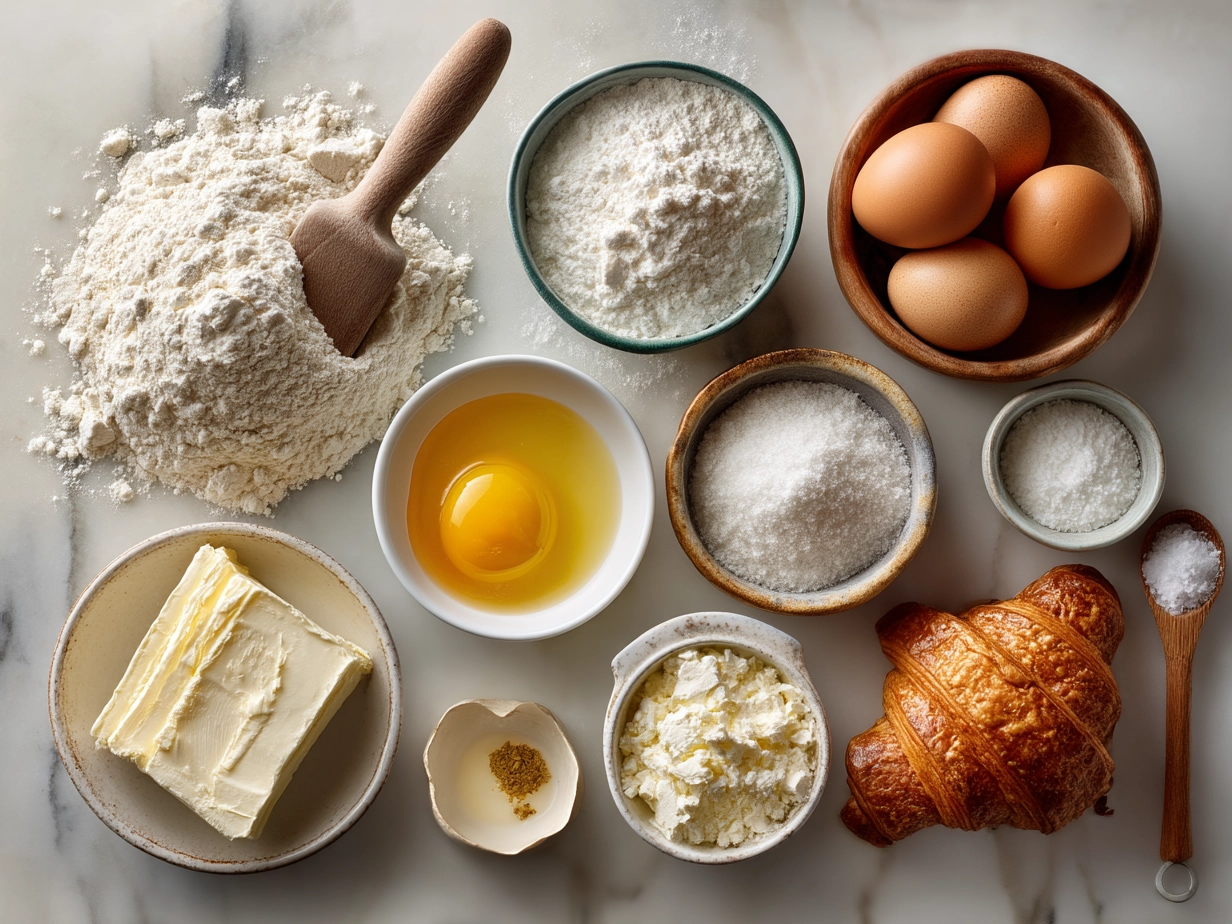
To make this French Croissant a reality in your kitchen, here’s what you’ll need:
- 3 1/2 cups (440g) all-purpose flour – You can grab this at any regular grocery store. Out of flour? Bread flour works great here, bringing some extra chewiness to your buttery pastry.
- 1/4 cup (50g) granulated sugar – Just a little sweetness to balance that buttery goodness.
- 2 teaspoons salt – Essential for flavor, no worries if you want to use fine sea salt for a subtle touch.
- 1 tablespoon instant yeast – This gives that perfect rise for flaky croissant layers.
- 1 1/4 cups (300ml) whole milk, warm – I always go for whole milk in my French Croissant dough for that richness; you can swap for 2% if that’s what’s on hand.
- 12 tablespoons (170g) cold unsalted butter – Here’s my secret little upgrade: I often add a couple extra tablespoons of butter folded into the final steps for that extra-rich buttery pastry feel.
- Extra flour for dusting
- 1 egg + 1 tablespoon water for egg wash
This French Croissant is kind to your wallet, relying on pantry staples but delivering bakery-worthy results. Quick prep tip: before you start, chill your butter really well—cold butter is the heart of those crisp layers we’re aiming for. Leftovers keep beautifully wrapped in the fridge for a couple of days or freeze well for longer. Just pop them in the oven to refresh that irresistible flaky croissant texture.
This French Croissant keeps the ingredient list approachable—because good food shouldn’t be complicated. And if you want to experiment, adding a sprinkle of cinnamon sugar before baking or folding in a sliver of dark chocolate makes for a delightful twist. Check out the Emily In France Exclusive The 14 Best Viennoiseries I Tried on My … for more exciting Viennoiserie ideas you might want to try alongside your French Croissant!
Let’s Cook This Together:
Ready to get those hands flaky? Here’s how we’ll make a French Croissant that’ll have your kitchen smelling incredible and your taste buds cheering:
- Mix the dough: Start by combining flour, sugar, salt, and instant yeast in a large bowl. Pour in the warm milk and mix until a shaggy dough forms. Easy to do by hand or with a stand mixer if you have one.
- Knead and rest: Knead the dough for about 5-7 minutes until smooth. Cover it with a damp cloth and let it rest for 30 minutes at room temp. This little pause helps activate the yeast—patience here pays off!
- Prepare your butter block: While the dough rests, lay out your cold unsalted butter between two sheets of parchment paper and bash it with a rolling pin into a flat square, roughly 7 x 7 inches. Chill it back in the fridge and get ready for the laminated dough magic.
- Enclose the butter: Roll your rested dough into a square twice as large as your butter square. Place chilled butter in the center, fold dough edges over, sealing the butter inside like a little package. This is the foundation for beautiful flaky croissant layers.
- Roll and fold: Time for the first fold! Roll your dough package out into a rectangle and fold it into thirds—like a letter. Chill for 30 minutes. Repeat this rolling and folding process two more times, chilling 30 minutes between each. It sounds like a lot, but while the dough chills, you can get your morning coffee or prep a breakfast side—the waiting is part of the fun!
- Shape the croissants: After the last chill, roll the dough out into a large rectangle about 1/4 inch thick. Cut into triangles, about 4-5 inches wide at the base. Roll each triangle from the base up into a crescent shape, tucking the tip under to hold it’s shape.
- Proof and egg wash: Place your shaped French Croissant on a parchment-lined sheet, cover lightly, and let them proof until puffy and almost doubled—about 1-2 hours. Then brush with your egg wash for that golden finish.
- Bake: Slide them into a preheated 400°F (200°C) oven and bake for 15-20 minutes until golden, flaky, and sending your kitchen into buttery croissant bliss.
If your first batch looks a bit uneven, don’t sweat it. French Croissant making is all about practice and patience. For handy shortcuts, the How to make buttery, flaky homemade croissants group is a fantastic resource packed with tips from fellow homemade croissant lovers.
While your French Croissant is baking, pour yourself something to drink and enjoy the rising anticipation. Soon enough, you’ll be biting into those crisp, buttery layers that make this breakfast pastry a classic.
How to Serve & Savor It:

This French Croissant truly shines when you serve it with a little butter and jam on a cozy weekend morning. My absolute favorite way to enjoy it is alongside a fresh fruit salad or a steaming cup of café au lait—simple, satisfying, and utterly delicious.
If you want to mix things up, I love serving these flaky croissants with soft scrambled eggs or alongside some smoked salmon for a brunch that feels fancy without the fuss.
French Croissant is perfect for breakfast or even a light afternoon snack. For a sweet-seasonal twist, try spreading some pumpkin spice butter or honey cream cheese during fall mornings—it pairs wonderfully and makes your breakfast feel festive. This reminded me of another favorite weekend treat, the Pumpkin Spice French Toast Casserole, for all those cozy vibes.
Here’s a little presentation hack: Warm your croissants briefly before serving, then arrange them on a tray with little bowls of jam, honey, and butter. It’s a crowd-pleaser every time.
Leftover flaky croissant? Break them up for a quick croissant bread pudding or toast slices topped with melted cheese and fresh herbs—a clever way to turn your French Croissant into a whole new adventure.
Your Questions, Answered:
Q: Can I prep parts of this French Croissant ahead?
Absolutely! You can make the dough and butter block ahead, then keep it chilled overnight. Just make sure the dough isn’t proofed yet—laminating dough works beautifully with some overnight chill to develop flavor.
Q: What’s a good swap for butter in this French Croissant?
Butter is crucial for that authentic buttery pastry taste, but if you need an easy swap, stick to European-style margarine made for baking. It won’t be quite the same flaky croissant, but close enough to satisfy a craving.
Q: How can I make this French Croissant for more or fewer people?
Simply scale the ingredients proportionally. I usually double the recipe when we have friends over—it’s a crowd-pleaser and always disappears fast!
Q: My French Croissant isn’t as flaky as I want. What gives?
The key is cold butter and proper laminating—if your dough or butter gets too warm, the layers blend instead of separating. Try chilling more between folds next time!
Q: Can I freeze shaped croissants before baking?
Yes! Freeze them on a tray, then transfer to a freezer bag. When ready, thaw and proof before baking for fresh buttery pastry anytime.
Q: Is laminated dough the same as puff pastry?
Great question! Laminated dough includes yeast, so it’s a bit lighter and airier, while puff pastry has no yeast and a straighter flaky texture. Your French Croissant is all about that lovely laminated dough structure.
Q: Any fun variations you recommend?
Definitely. Adding a sprinkle of chocolate chips or almond paste inside the triangles before rolling makes for decadent variations. Also, check out What is the definition of a viennoise? for inspiring ideas within the Viennoiserie family.
Final Foodie Thoughts:
This French Croissant holds a special place in my foodie heart because it turns simple ingredients into that golden, flaky pastry joy we all crave. It’s the kind of breakfast pastry that feels impressive without intimidation and brings people to the kitchen table with smiles.
My Top French Croissant Tips:
- Keep your butter cold through every step—this gives you those signature flaky croissant layers.
- Be patient with resting and proofing times; they build richness and texture.
- Don’t be afraid to shape your croissants a bit rustic. Homemade croissants that look unique taste amazing!
My favorite variations? I adore classic butter French Croissant, chocolate-filled, and almond-topped croissants. The classic buttery pastry version is the crowd favorite every time, but adding a little chocolate makes it an all-time hit in our house.
For a cozy weekend project or a special breakfast treat, this French Croissant recipe invites you to get comfy in your kitchen and savor each layer. I hope you fall in love with it as much as I do and find your own little ways to make it yours.
If you’re into this, you’ll probably love the French Butter Cake I recently shared too—it’s buttery, tender, and just dreamy alongside your croissants.
Get ready to fill your kitchen with warm, flaky croissant magic. Happy baking, friends!
French Croissant

Classic French croissants are flaky, buttery pastries perfect for breakfast or a delightful snack, made with layered yeast-leavened dough for a tender, airy texture.
- Prep Time: 45 minutes
- Cook Time: 20 minutes
- Total Time: 3 hours 45 minutes
- Yield: 12 servings
- Category: Breakfast
- Method: Baked
- Cuisine: French
Ingredients
- 4 cups all-purpose flour
- 1/2 cup warm milk
- 1/4 cup granulated sugar
- 1 tablespoon active dry yeast
- 1 teaspoon salt
- 1 cup unsalted butter, chilled
- 1/2 cup warm water
- 1 large egg (for egg wash)
Instructions
- In a small bowl, dissolve yeast in warm water with a pinch of sugar and let it activate for 5-10 minutes until frothy.
- In a large mixing bowl, combine flour, sugar, and salt. Add the activated yeast mixture and warm milk. Mix until a dough forms.
- Knead the dough for 8-10 minutes until smooth. Cover and let it rise for 1 hour or until doubled in size.
- Roll out the dough into a rectangle. Place chilled butter slabs in the center, then fold dough over to encase butter.
- Roll the dough with the butter inside into a large rectangle, fold into thirds (like a letter), and refrigerate for 30 minutes.
- Repeat the rolling and folding process two more times, chilling for 30 minutes between each fold to create layers.
- After final folding, roll dough out and cut into triangles. Roll each triangle from base to tip forming a crescent shape.
- Place croissants on a baking sheet, cover, and let them proof for 1-2 hours until puffy.
- Preheat oven to 375°F (190°C). Brush croissants with beaten egg for shine.
- Bake for 15-20 minutes until golden brown and flaky.
- Cool slightly before serving warm with butter or jam.
Notes
For an extra flaky texture, ensure the butter stays cold during laminating. Serve fresh with coffee or fruit preserves for a traditional French breakfast.